Cuba: Bike Touring at a Different Pace
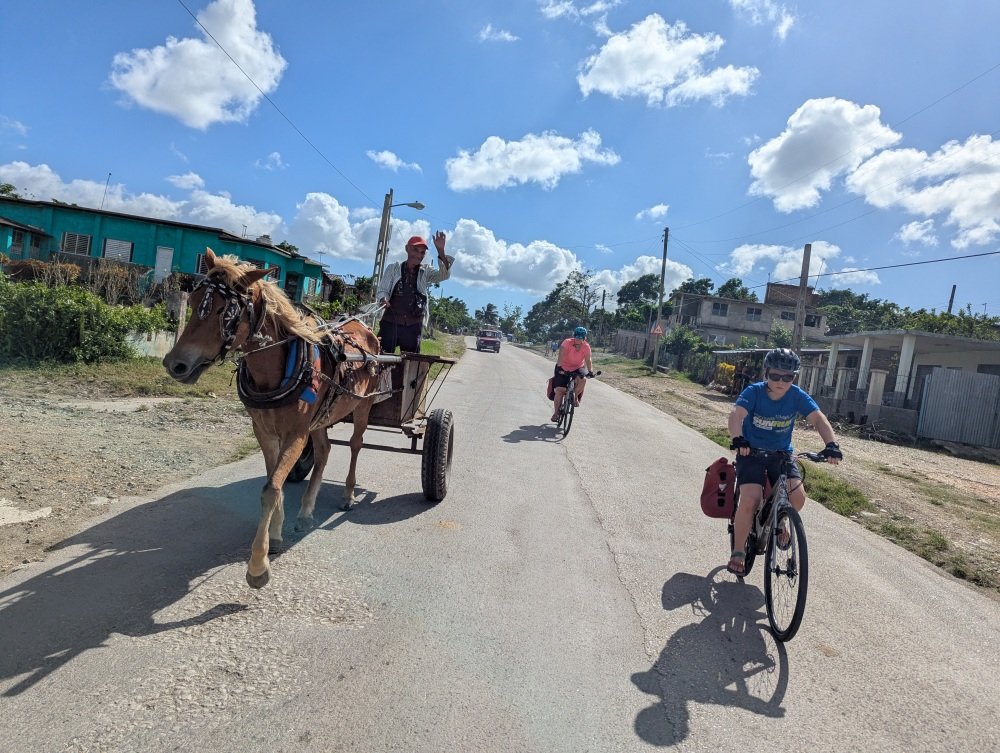
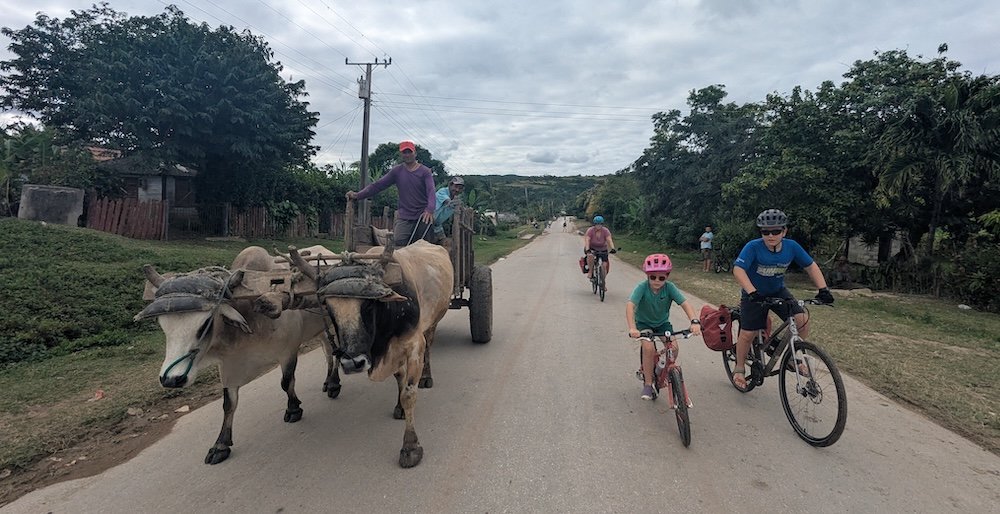
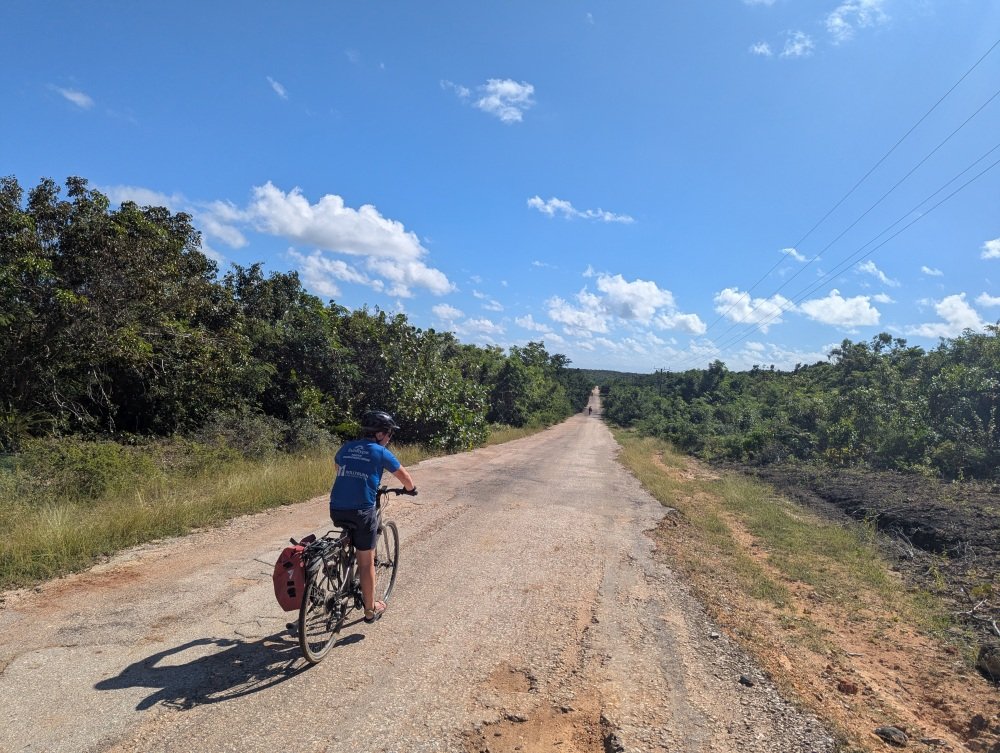
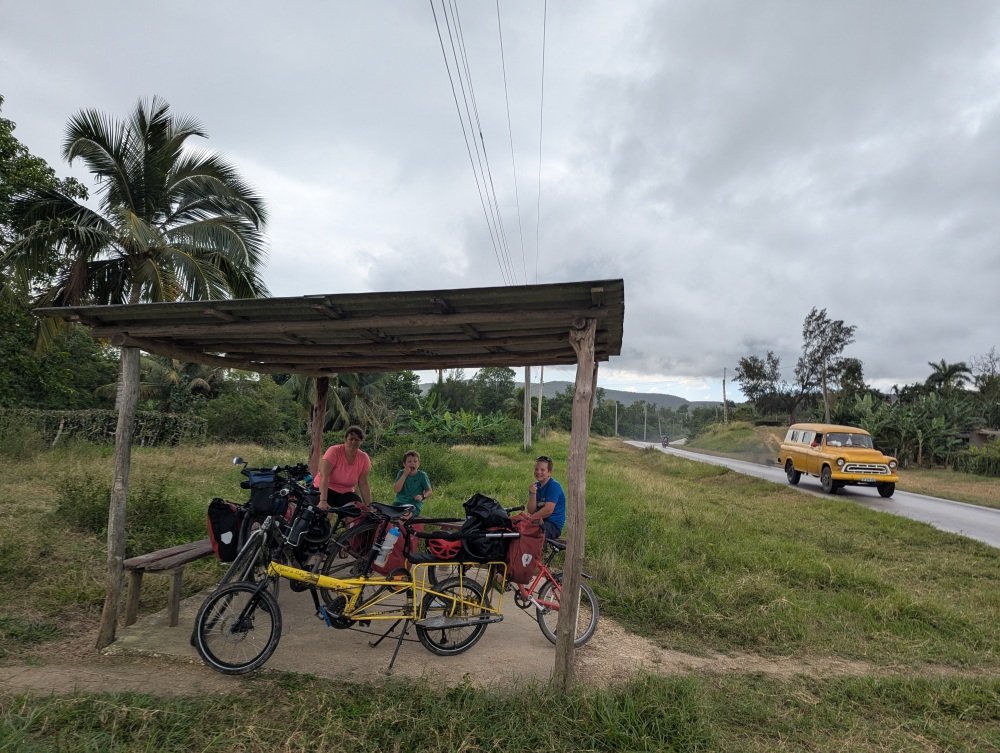
We spent winter break cycling in Eastern Cuba, where the pace of life is different and cars don’t dominate the roads. Due to fuel shortage, among other issues, “traffic” is more likely to be a horse-drawn cart, bulls, cows, or the occasional old American cars. The empty roads make it a cyclist’s dream, but the reality for Cubans today is tough, and you can feel it everywhere.
The Anxiety
There were many reasons to cancel this trip. Hurricane Melissa had just hit the eastern coast of Cuba shortly after we booked our flights. Then we started hearing reports about outbreaks of Chikungunya , Dengue, and Oropouche. There was also a looming pilot strike, and rumors of shortages of food, running water, and electricity were everywhere. We had been to Cuba 14 years prior and held great memories, but this time, the anxiety was building up. It didn’t really feel right at first…
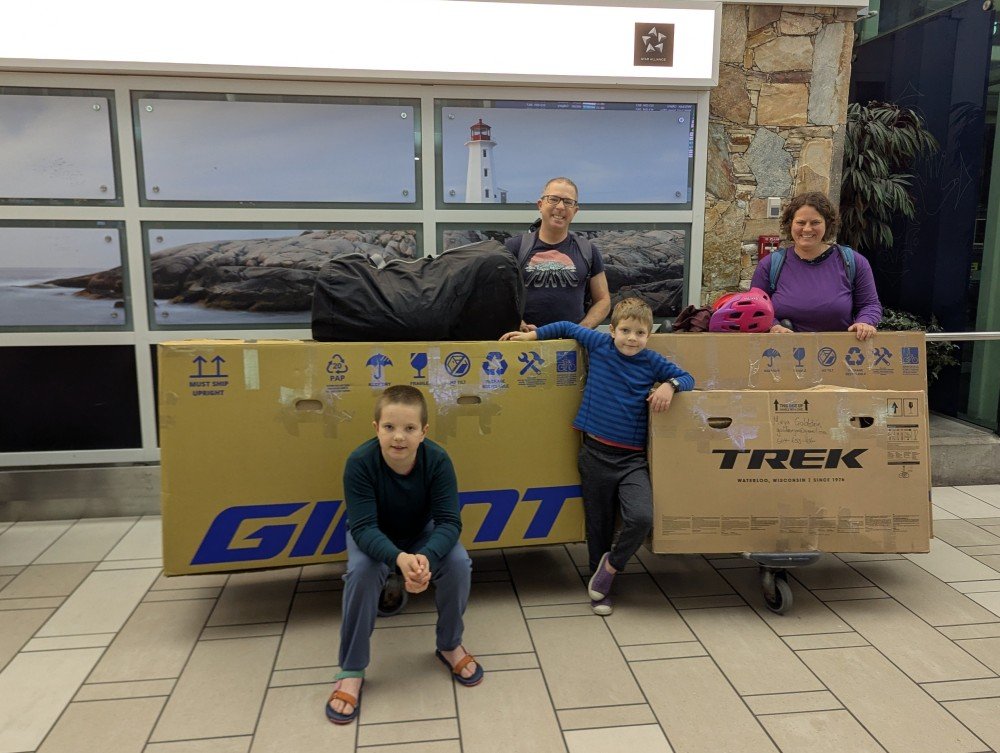
It didn’t help that when we landed in Holguín, our bikes did not arrive with us. They had apparently taken a detour to Montreal, despite the fact that our flight was through Toronto. Our first night was a “pitch black” introduction to the energy crisis. The main plaza was dark, there were no vendors, and in the gloom, it felt like a vague, unattractive version of Mexico. We started wondering what have we’ve gotten ourselves into?
Finding our Flow
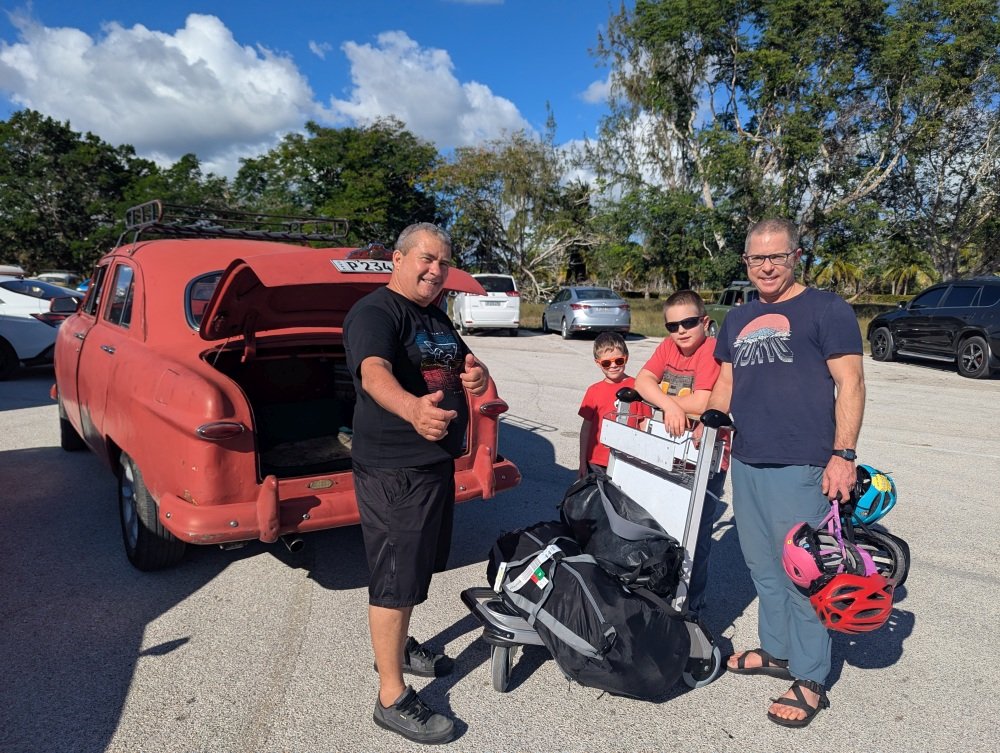
But then, we woke up to a sunny blue sky day. Our hosts, Rafa and Ana Margarita, were lovely people who did everything they could to make us feel at home. By the next evening, our bikes finally arrived, and our perspective started changing.
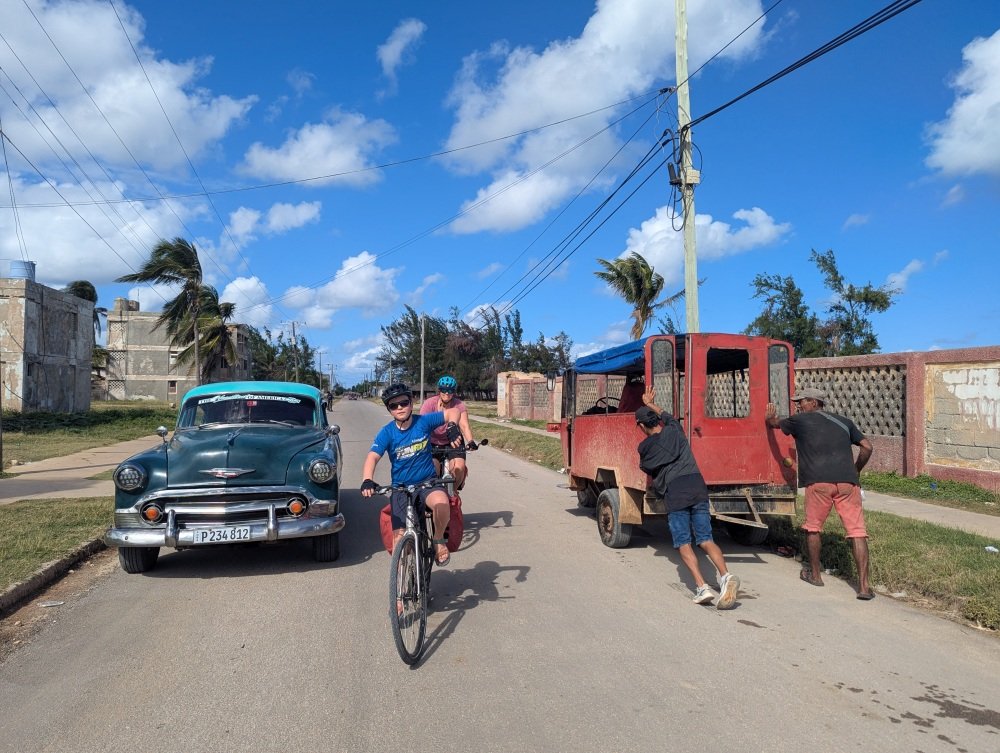
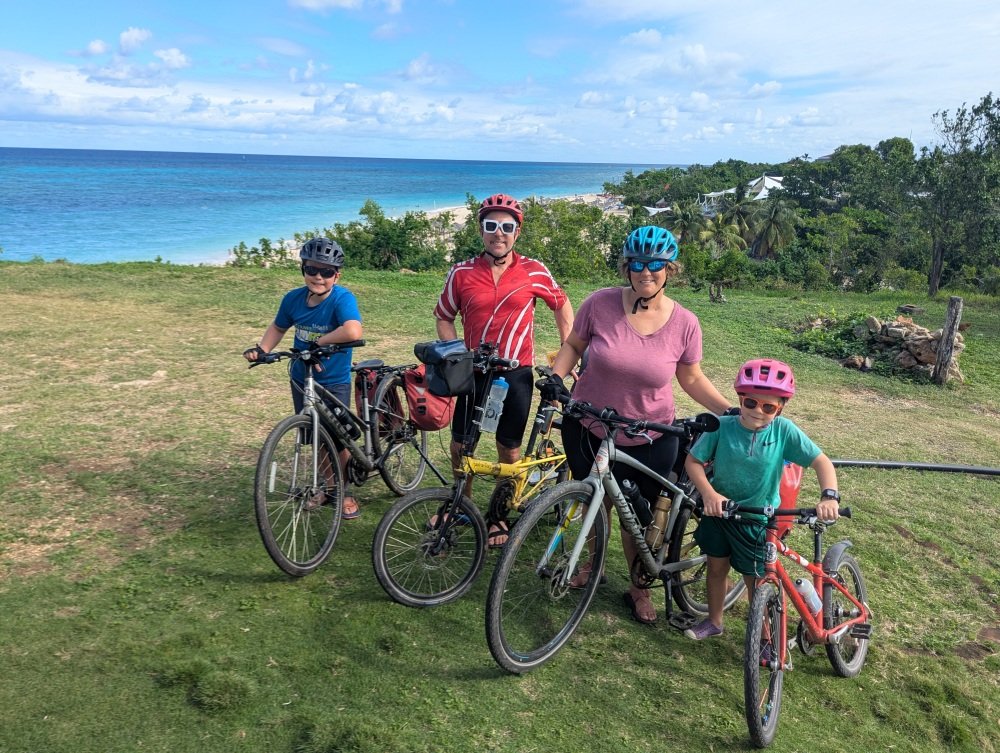
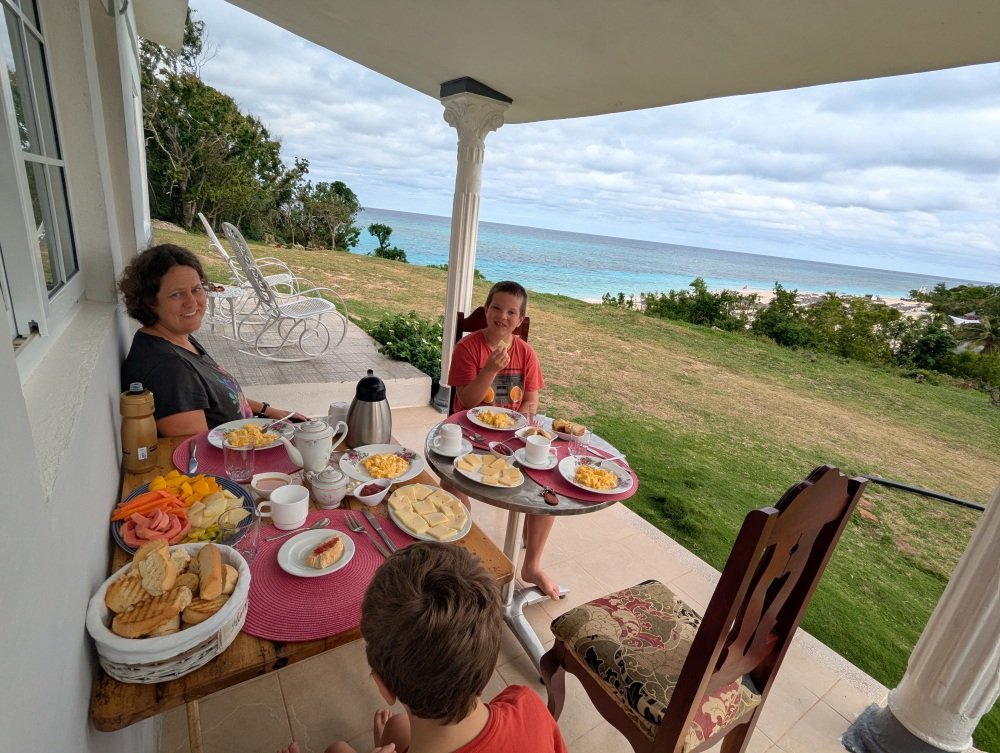
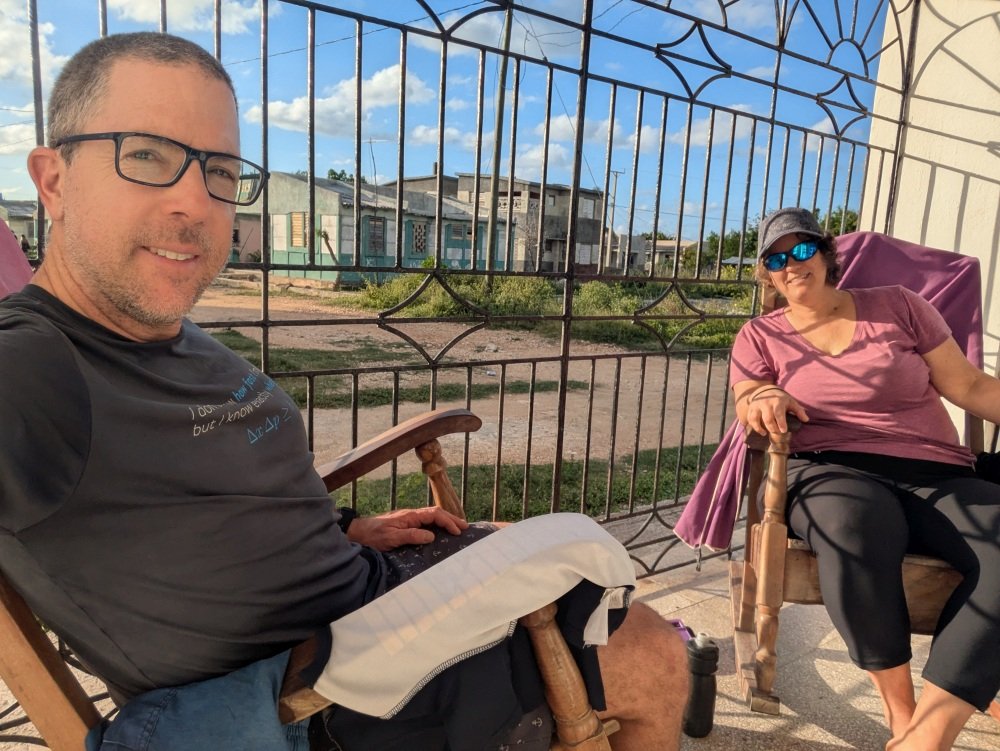
On this trip we embraced a much slower pace than we are used to, spending about a week near the beach in Guardalavaca. First we stayed at a little farm with Tanya and Victor, where we spent New Year’s Eve listening to their festive celebrations from our room. They invited us to join, but for me, being in bed by 11:00 PM made it the perfect New Year’s Eve. Later, we moved to a second casa particular (a type of B&B) right on a cliff. Words cannot do justice to the view we had from there, or the incredible food they prepared for us.
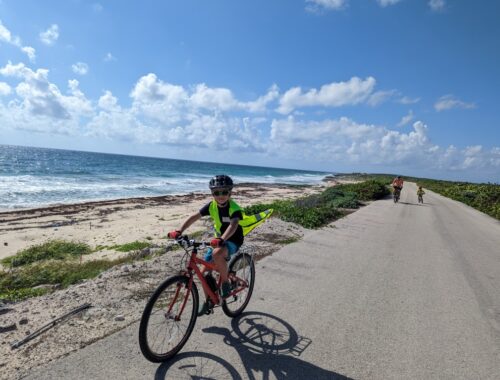
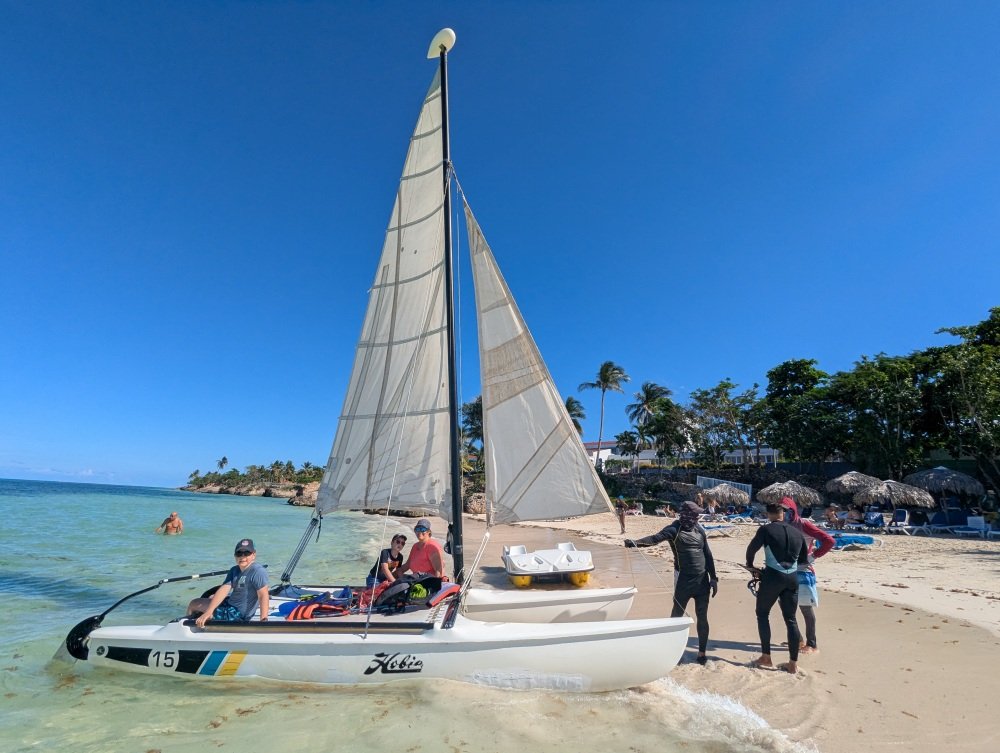
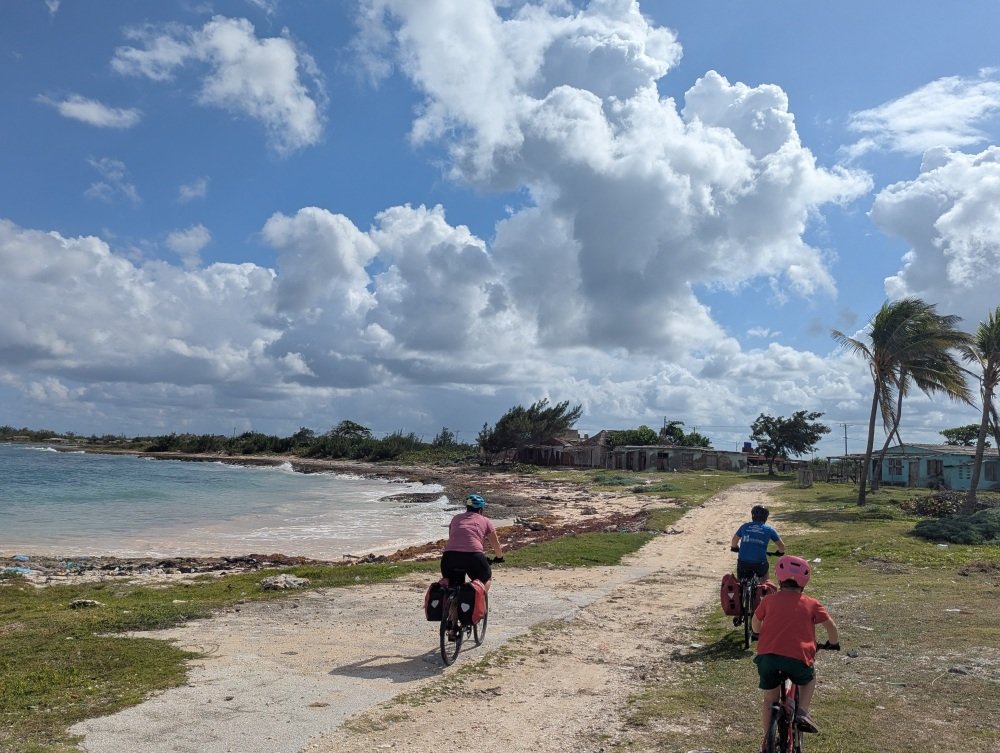
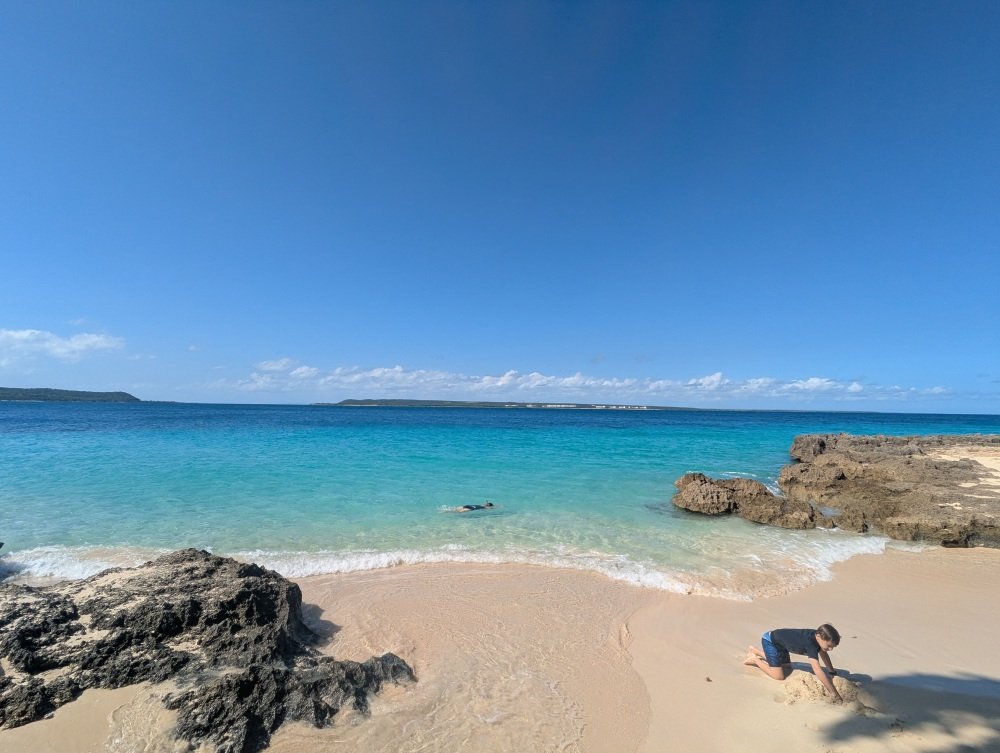
The kids enjoyed the ocean so much. We spent our time cycling to different beaches, we went snorkeling just from the shore and even took a catamaran out twice. The second time was somewhat stormy and it even started raining while we were in the water. At least we were wet anyway…
Ocean, Pools, and Pigs
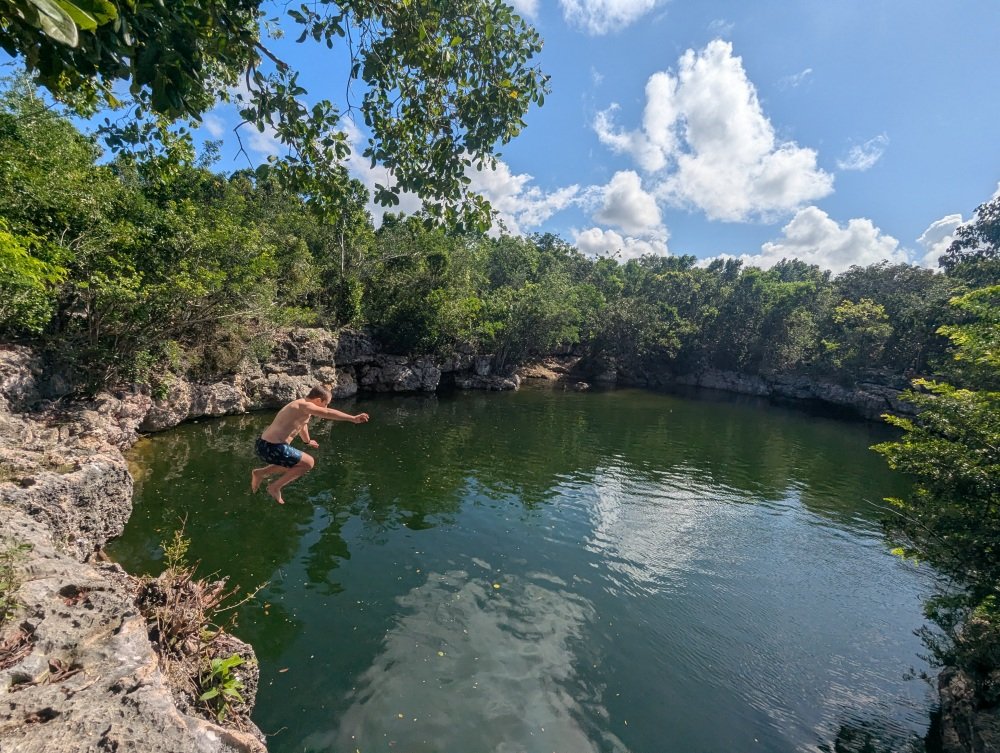
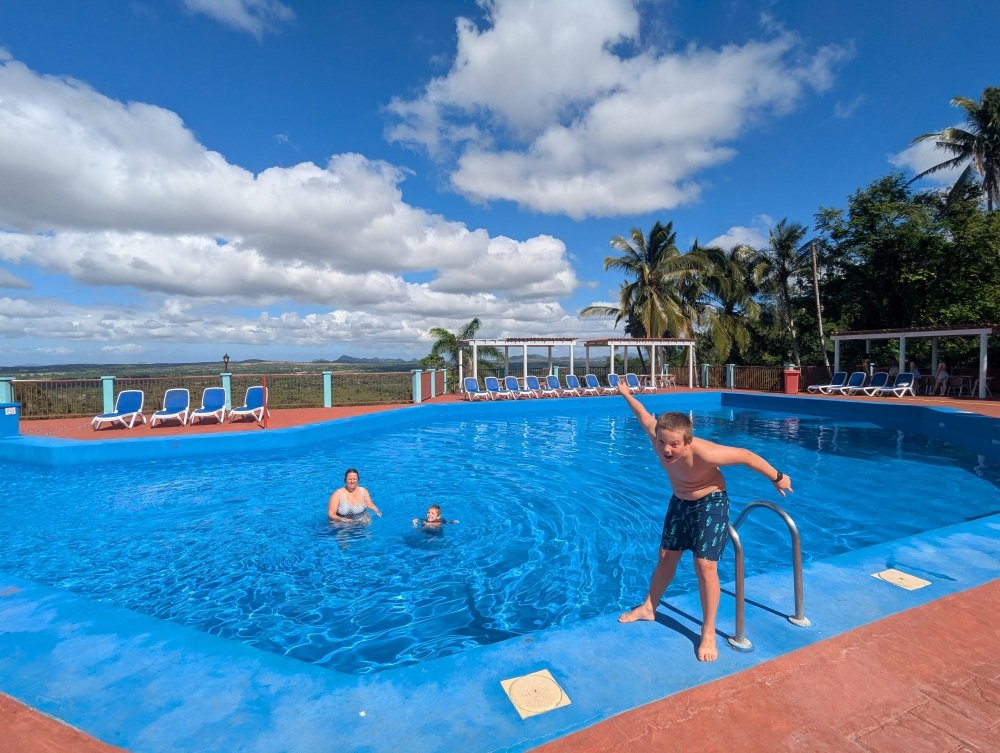
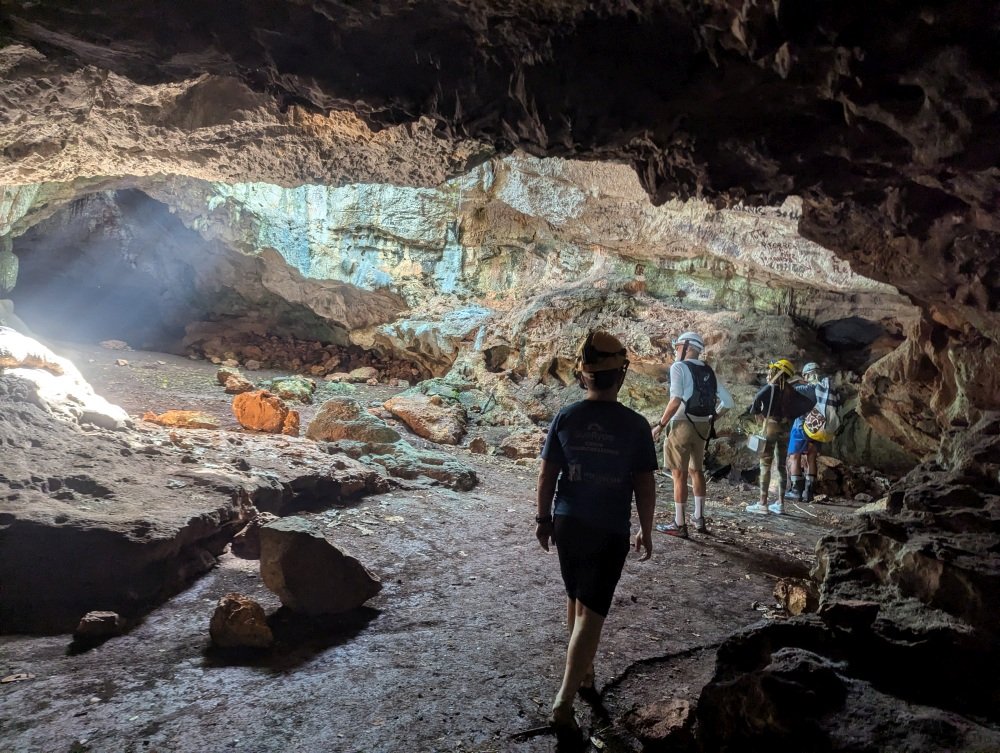
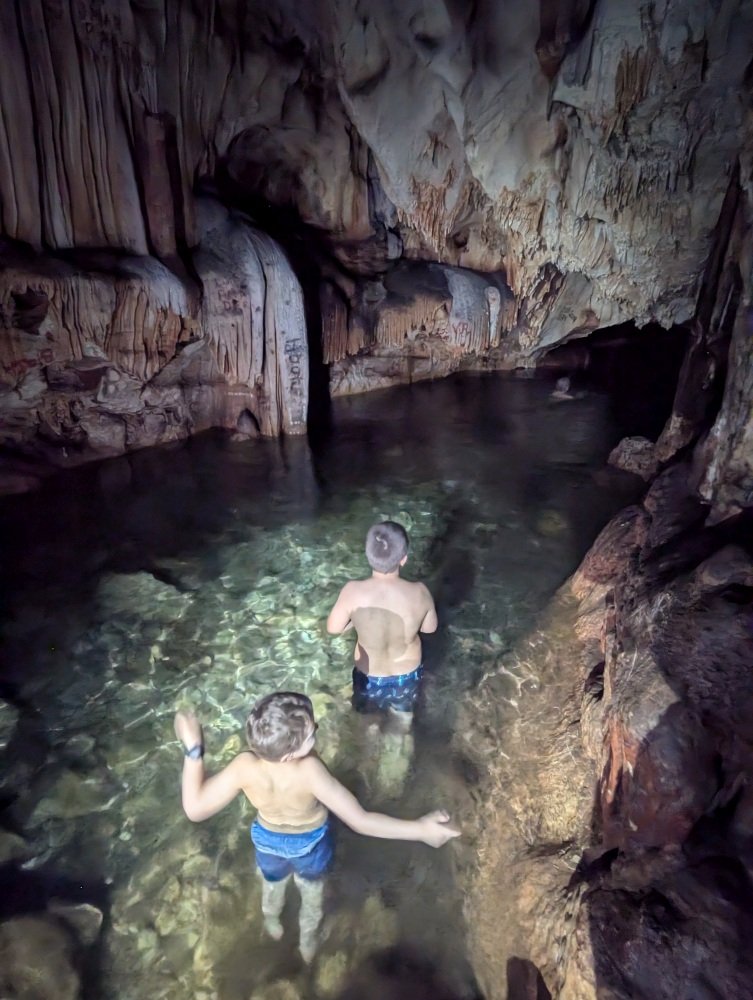
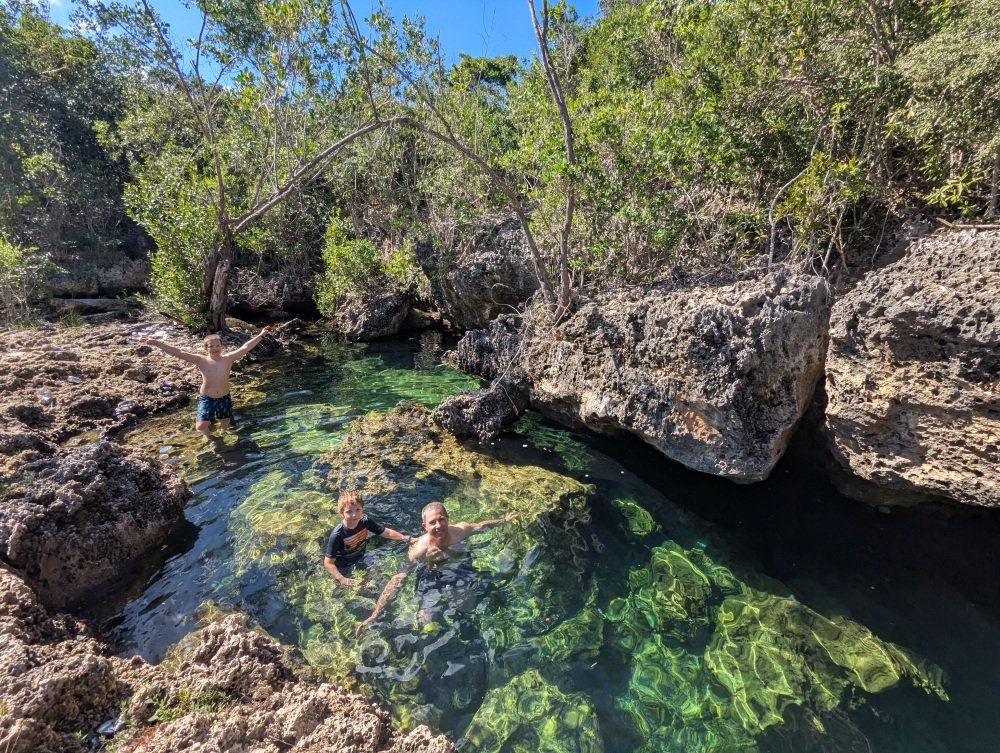
This trip wasn’t just about the ocean. We found a hidden cenote, a cave to swim in, natural swimming holes, and even a few swimming pools. On our first day in Holguín, still waiting for our bikes, we visited a hotel pool that was loud and a bit dirty, which didn’t exactly lift our spirits. When we returned to Holguín at the end of our loop, we were in a better state of mind. We rode up to the Mirador de Mayabe, a nice hotel on top of a hill with a pool where we were the only ones in the water most of the time.
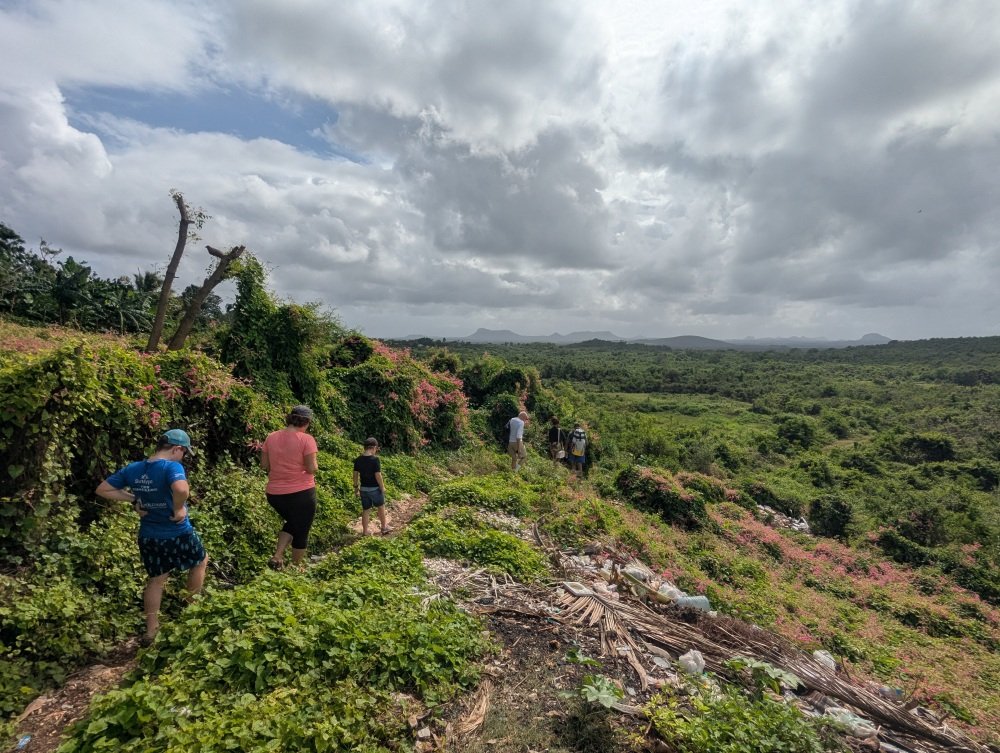
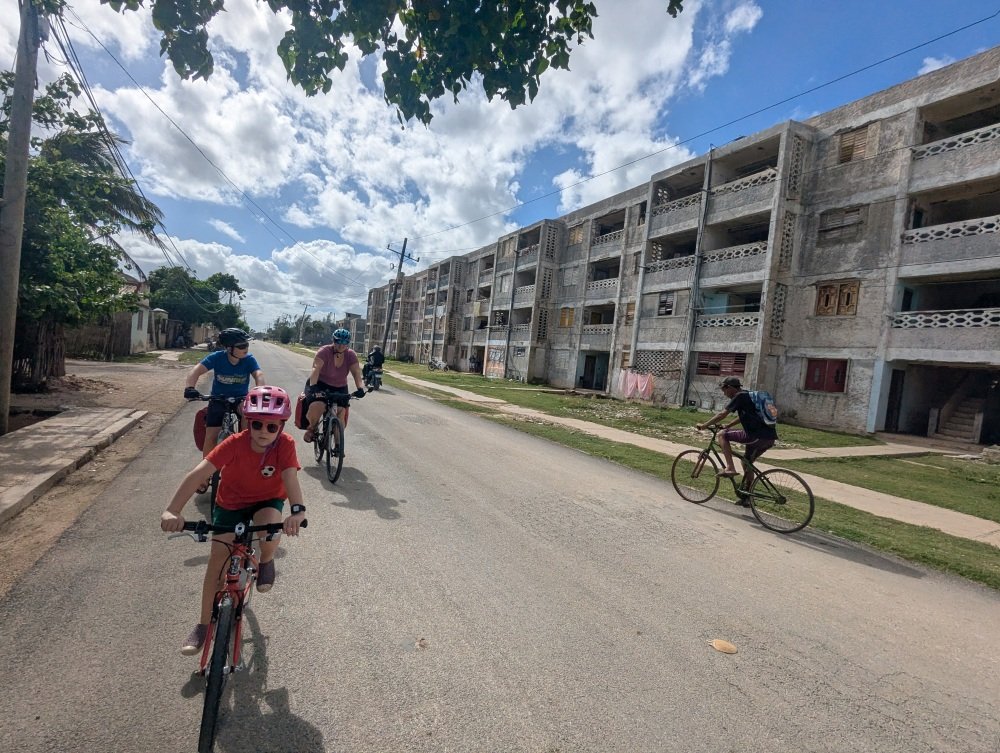
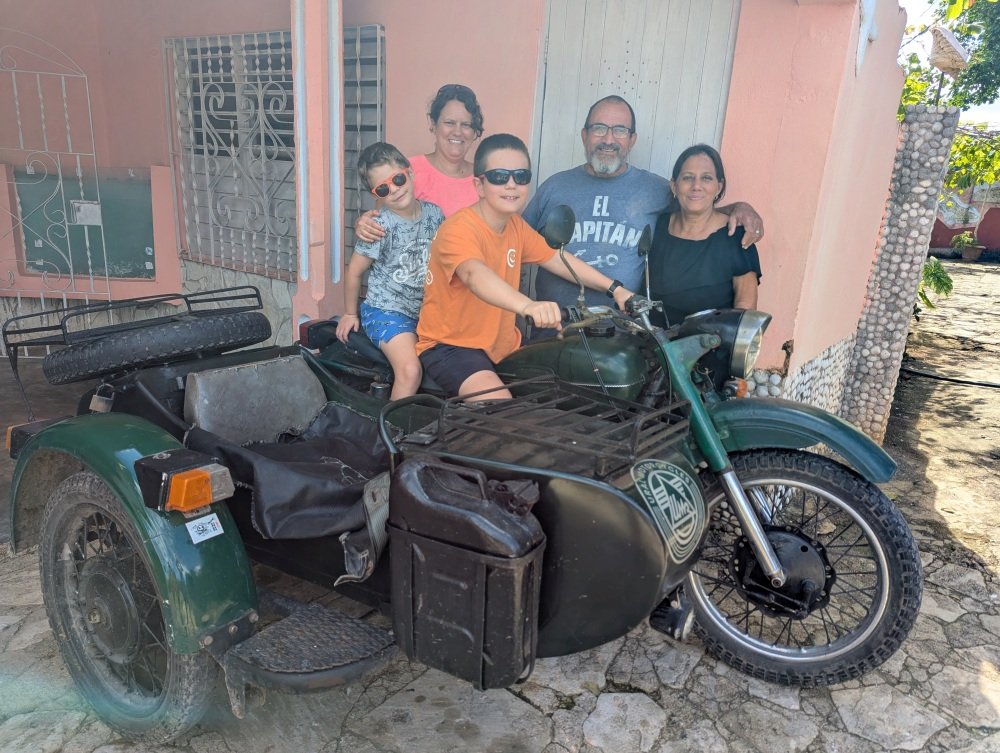
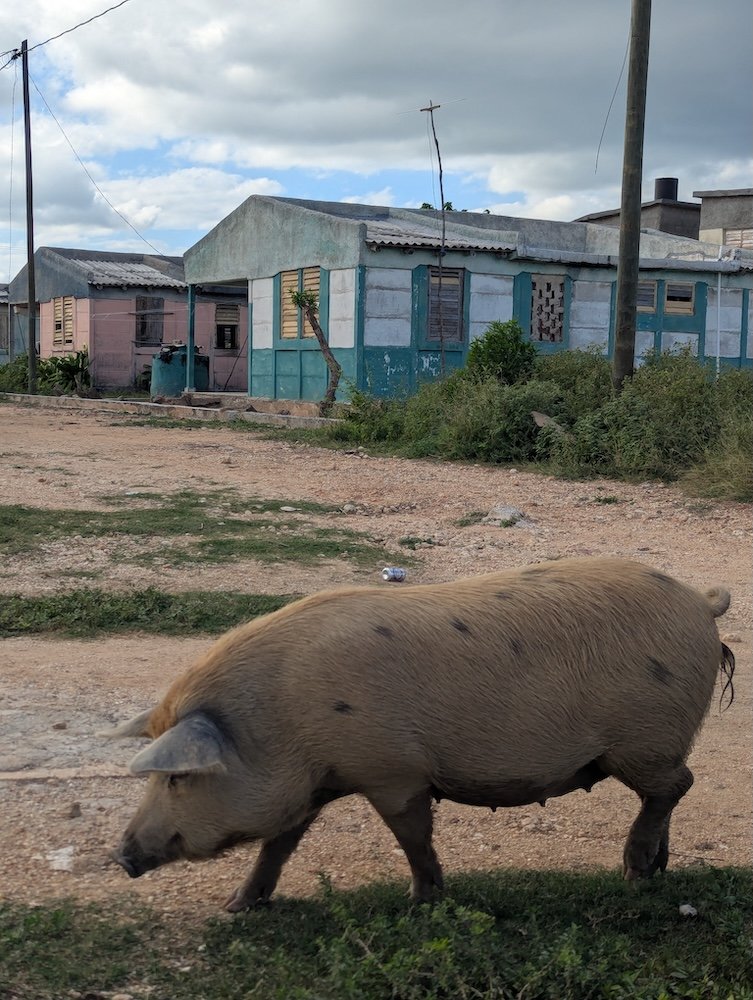
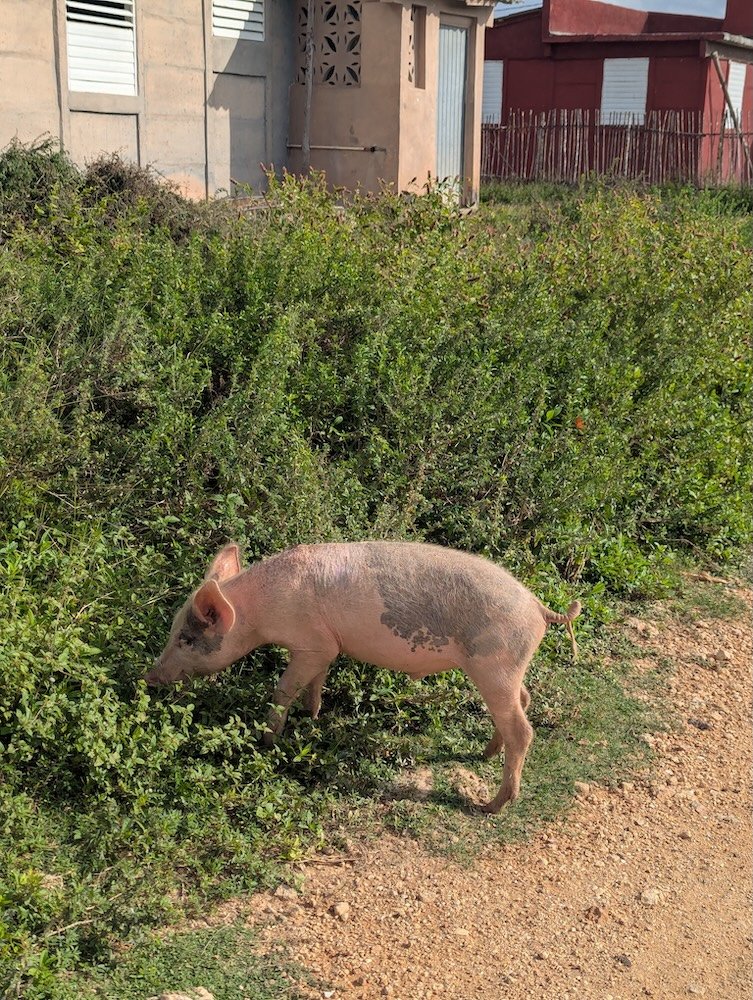
Of course, the “real” Cuba was always there. In Gibara, a severe water shortage meant forgoing showers for a few days and flushing the toilet with a bucket. In Caletones, we saw the raw aftermath of the hurricane, which had taken the roofs off some houses and the local school. Without an official casa in Caletones, Diana and her family took care of us. They let us stay in an almost empty house, while they cooked breakfast and a seafood dinner for us. It sounded like everyone in that village had had Chikungunya, and the effects were still there. Without access to pain killers and other medication, people were still suffering joint pains months later. In Caletones, it seemed like there were more pigs than people walking around.
The Problem That Doesn’t Exist
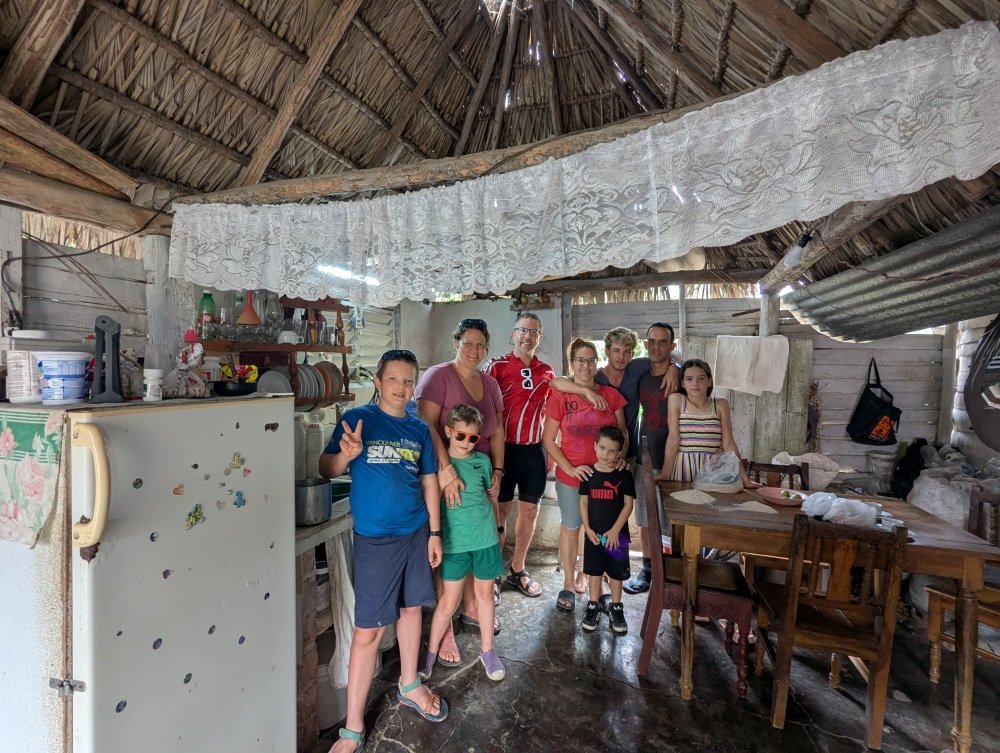
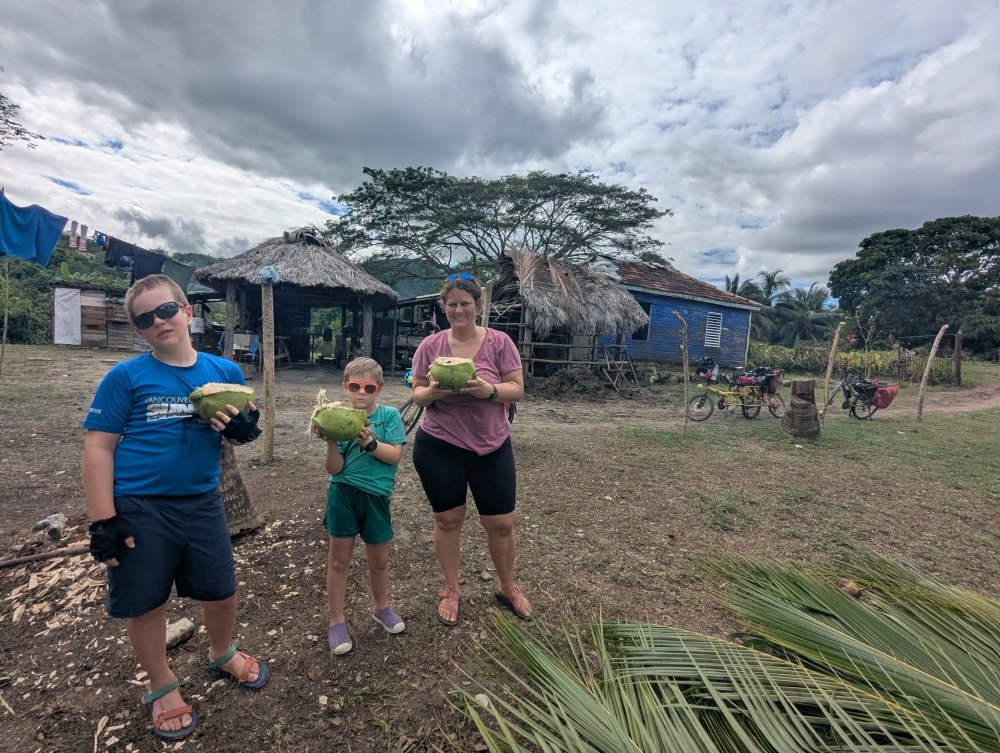
In another small village, we met Carlos and his two kids as they were biking home from school. We started talking, as you often do when you eat lunch on the side of the road. They invited us back to their home for Cuban coffee, a classic example of the warmth we found everywhere in Cuba. As we chatted, they asked about my work back home. I found myself at a total loss for words. How do you explain the concept of a Bike Bus, a solution to a problem that simply doesn’t exist in their world?
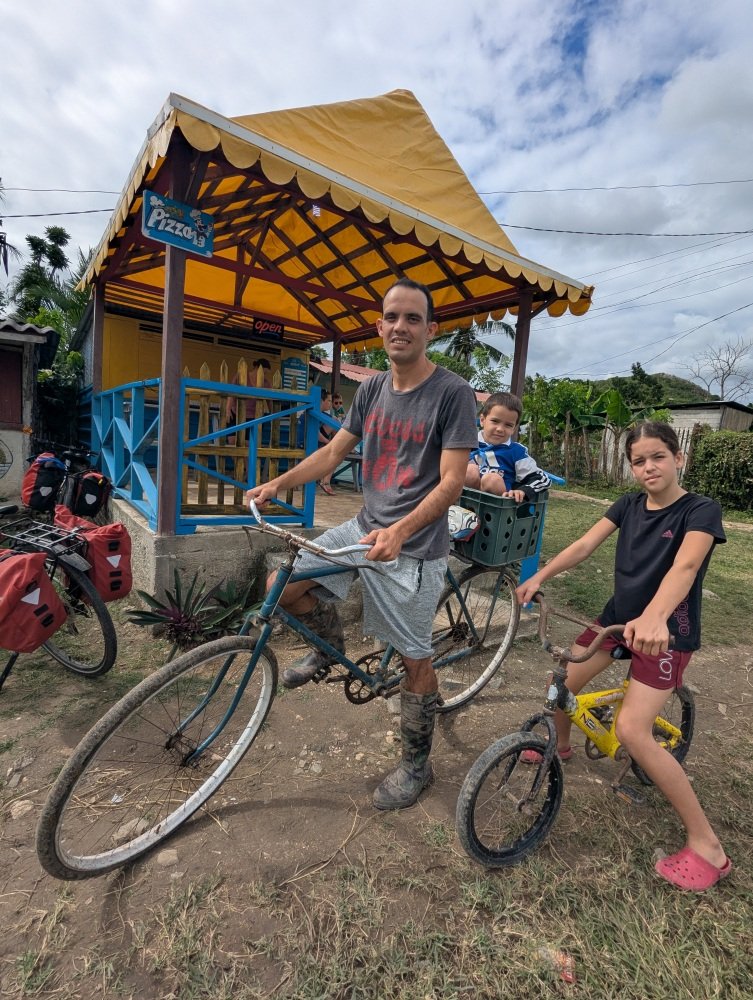
In Cuba, a bike isn’t a lifestyle choice, a fun activity or a political statement. For Carlos’ family, living on the outskirts of the village, those two wheels meant beating the tropical sun and getting to school on time. Any bike will do and a simple wooden box strapped to a rack makes for a nice child seat.
Different Pace / Different Mindset
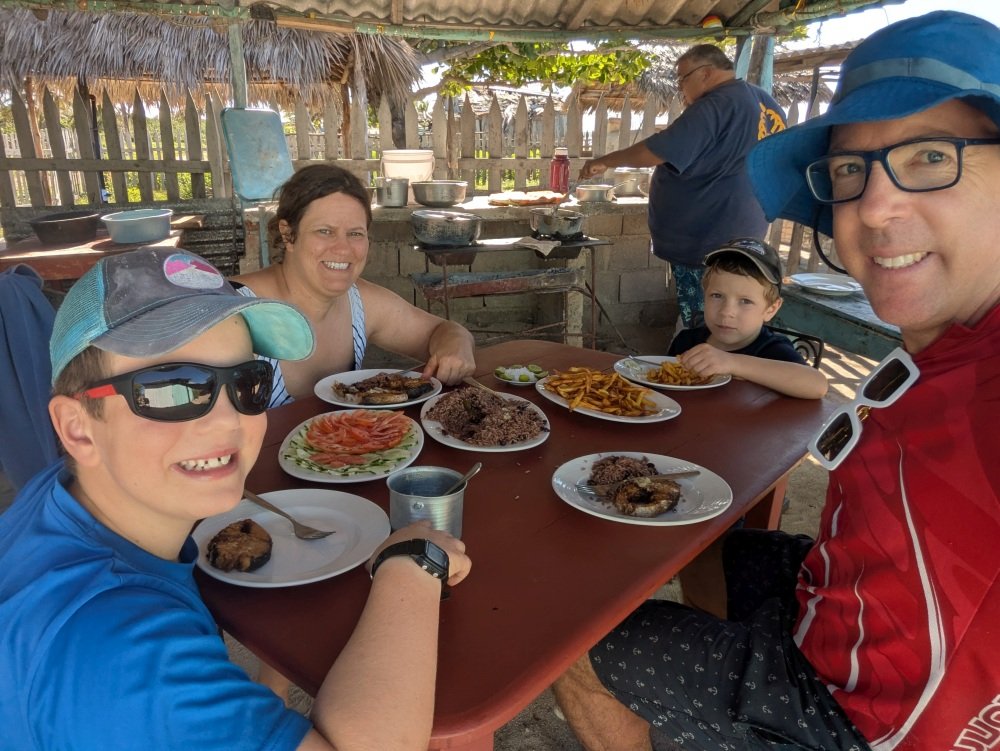
Looking back, we certainly picked the right time to go, as unfortunately things changed quickly for the worse for Cuba shortly after we got back. The roads were sometimes incredibly bumpy, like the road full of potholes on the way to Playa Morales, but when we finally arrived, it was totally worth it. Dariel, a friend of our host in Banes, made us a tasty meal of fresh fish, and his son showed us the way to a hidden swimming hole.
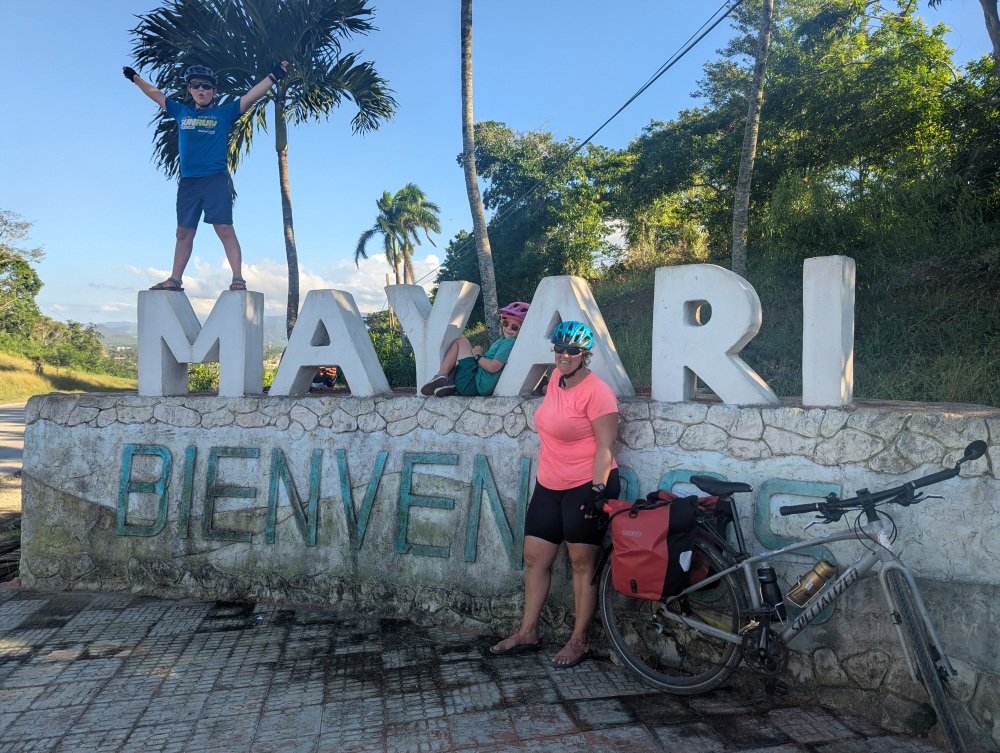
Beyond the scenery, we talked to so many Cubans about their lives and the problems they face. People were so open, honest, and loved to share. They seemed to be just as curious to learn about where we were coming from and what life looks like in Canada, as we were about them and Cuba. In Mayarí, we stayed with Sonia and Israel, another pair of lovely hosts who went out of their way to help us. Israel even drove us to Cayo Saetía, one of the most pristine beaches we’ve ever been to, so we could spend the day there.
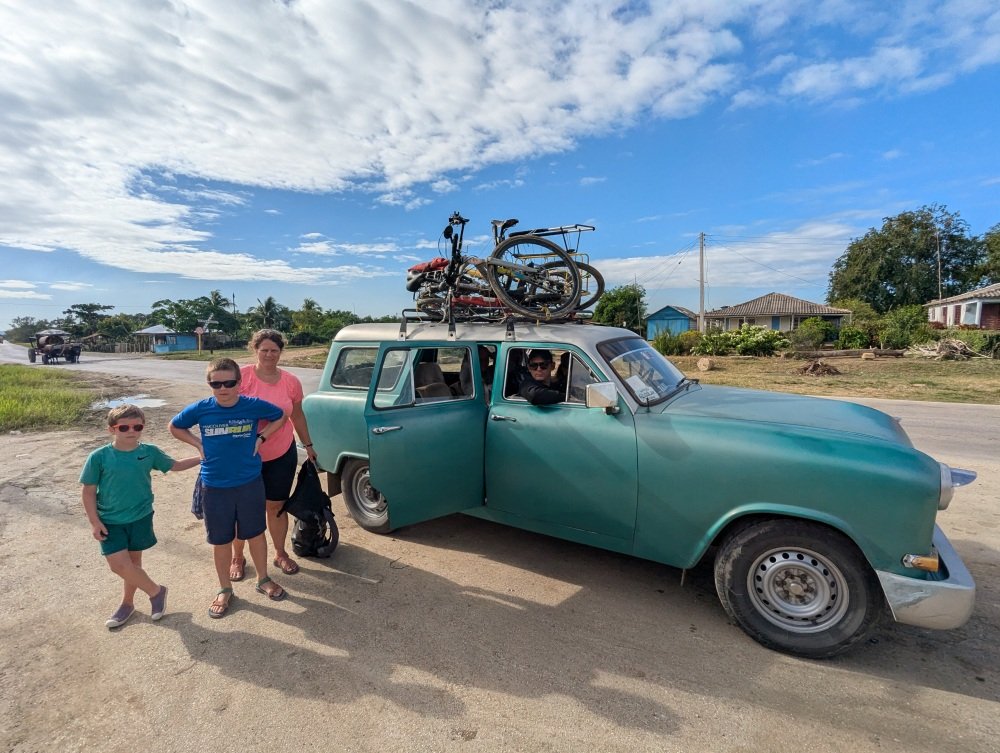
From Mayarí, we needed to get back to Holguín, but the distance was too long for us to bike in one day with no accommodation options along the way. The solution according to our hosts was simple. Just catch a shared taxi half way to Holguín, with the bikes strapped to the roof. We were skeptical, but they helped us and it worked! It took a good 20 minutes to get everything loaded and secure. Even though there were people already waiting inside the car, no one was in a hurry. They waited patiently until our gear was secured, a different pace for sure, as well as a different mindset.
Travelling Back in Time
Traveling in Cuba isn’t always easy, and it certainly isn’t “relaxing” in the traditional sense. Though with the casas along the way, the meals prepared especially for guests, and a positive attitude it can be an incredible experience. Like Neil said it felt like travelling back in time. He said that our trip to Japan felt like a trip to the future, while Cuba was very much the opposite.
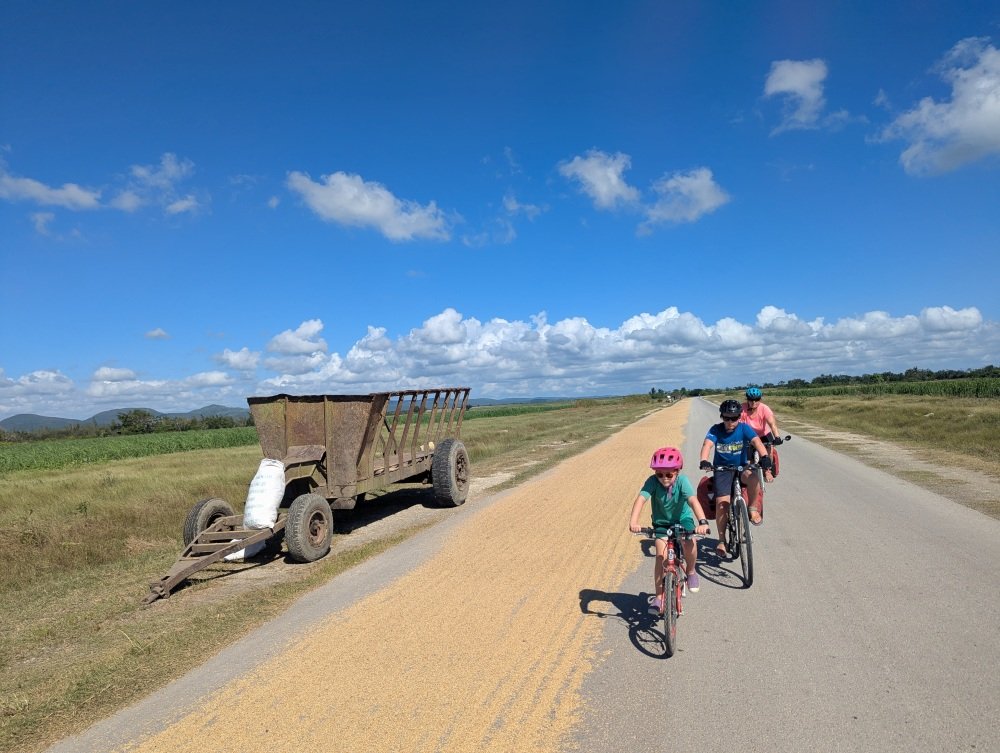
This trip was so worth it, and despite all the hesitation, hurdles and bumps along the way, I am so glad we took the opportunity to explore this part of Cuba by bike. The kids are getting older, our daily lives at home are full and busy. So going back in time to experience a different pace of life made us appreciate our time together even more.